
How it usually shows up
- Burning, tingling, or pins and needles running down an arm or leg
- Numbness in a specific patch rather than the whole limb
- Weakness gripping, lifting, or pushing off
- Symptoms that change sharply with position
What Dr. Chris actually does about it
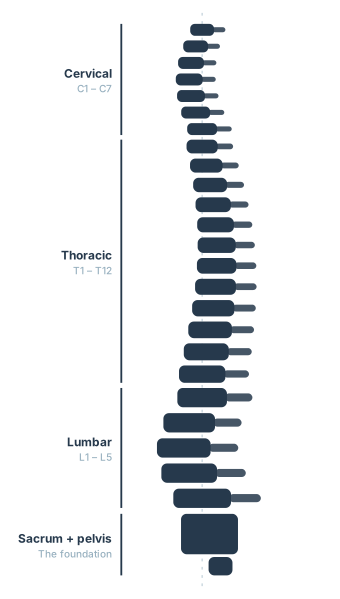
This is what the Gonstead system was built to find. Thirty-one pairs of nerves exit the spine, and the analysis is designed to identify which level is involved: a temperature break on the nervoscope pass, swelling and tenderness on static palpation, restriction on motion palpation, and confirmation on film. The adjustment is delivered to that level in the specific direction the analysis indicates.
Not every pinched sensation comes from the spine. A nerve can also be compressed further along its path, the way carpal tunnel syndrome pinches a nerve at the wrist or thoracic outlet syndrome pinches one near the collarbone. Part of the first visit is sorting out whether the irritation is coming from a level in the spine, which the Gonstead analysis is built to find, or from somewhere else along the nerve, which needs a different kind of care.
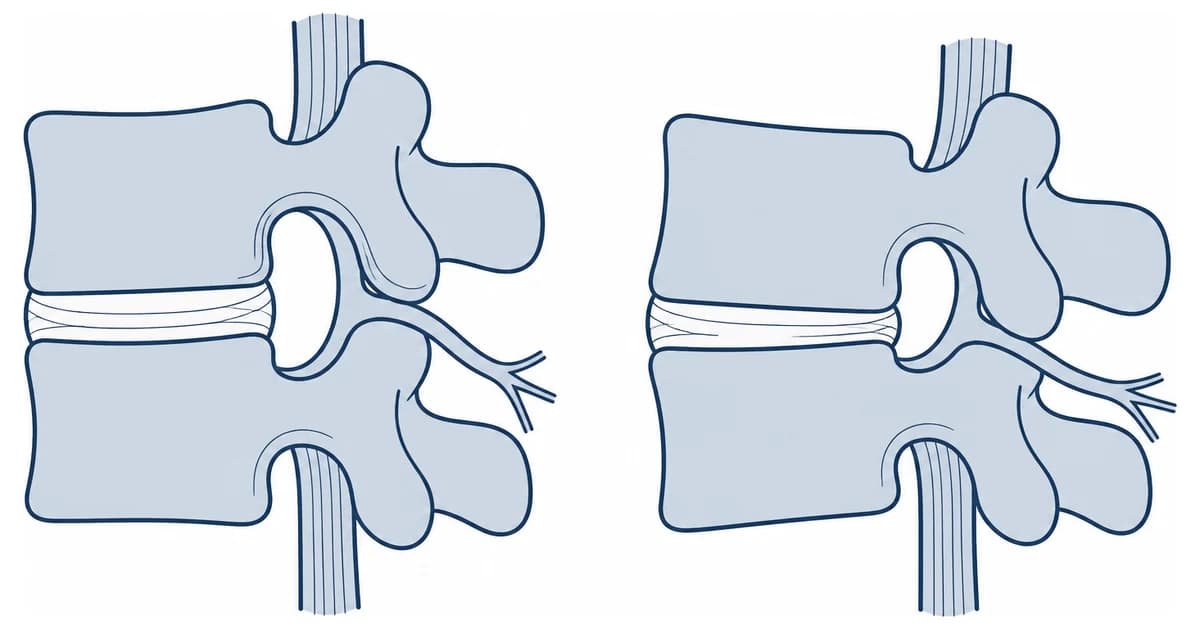
Where the spine is involved, the aim is to correct the mechanical cause rather than to work the whole area with heat, stim, or general massage. A segment that is restricted or shifted narrows the opening a nerve exits through. Correcting the position and restoring motion at that specific level is what takes the pressure off, which is why the adjustment only touches the level the analysis identified instead of the whole spine.
Questions people ask
- Can a chiropractor help with a pinched nerve?
- Chiropractic care can help when the compression is coming from a spinal segment that is restricted or shifted and narrowing the opening a nerve exits through. It does not help every case, because pinched nerve symptoms can also come from somewhere else along the nerve's path, like the wrist or elbow, which is not a spinal problem. An exam, and in this practice a set of films, is what determines whether the compression is actually spinal before any adjustment is considered.
- Can a chiropractor make a pinched nerve worse?
- It is possible, though not common when care starts with a real exam. The main risk is adjusting a level without first confirming which segment is involved and in which direction it has shifted, which is why films are taken here before care begins rather than after. A brief increase in symptoms during the first few visits can also happen and is not the same as being made worse.
- How does a chiropractor find which nerve is pinched?
- Dr. Chris runs the same five-part Gonstead analysis on every visit: visualization, a nervoscope reading that checks temperature side to side down the spine, static palpation, motion palpation, and full-spine standing X-rays. Thirty-one pairs of nerves exit the spine, so the point of the analysis is to identify the specific level involved rather than working wherever the pain happens to be felt. Only the segment the analysis points to gets adjusted, in the direction it indicates.
- Is a chiropractor or physical therapy better for a pinched nerve?
- They work through different mechanisms and are not strictly competing options. Chiropractic addresses compression coming from a spinal joint that is restricted or out of position, while physical therapy builds strength and flexibility around the area and can reduce ongoing load on a nerve. Many people use both, and which one makes sense first depends on what an exam finds, not a general rule about which profession is better.
- How long does it take for a chiropractor to help a pinched nerve?
- There is no set timeline, because it depends on which level is involved, how long it has been irritated, and whether a disc is part of the picture. Some people notice a change within the first few visits, and others take longer. Dr. Chris tells you what to expect for your specific case after the exam rather than quoting a general number.
- Can a pinched nerve get better on its own without treatment?
- Mild nerve irritation sometimes settles on its own as the swelling around it eases, particularly if the aggravating position or activity is removed. It is less likely to settle on its own when a spinal segment is genuinely restricted or shifted and continuing to narrow the space the nerve exits through, since the mechanical cause is still present. There is no way to tell which situation you are in without an exam.
- When is a pinched nerve a medical emergency instead of a chiropractic case?
- Go to urgent care or an ER, not a chiropractor's office, if you have new loss of bladder or bowel control, numbness in the groin or inner thighs, or weakness in a limb that keeps getting worse day to day. Symptoms showing up in both arms or both legs at once, or a pinched nerve that started after a serious fall, crash, or other trauma, also need medical evaluation first. Outside of those signs, a pinched nerve is generally reasonable to have evaluated by a chiropractor.