
Our focus
Neuro-Structural Correction with the Gonstead Method
Care aimed at restoring spinal structure and nerve function, so the goal is relief that lasts rather than relief that needs repeating. Dr. Chris uses the Gonstead method, and the Webster technique during pregnancy, as his primary means of achieving it.
There is a normal
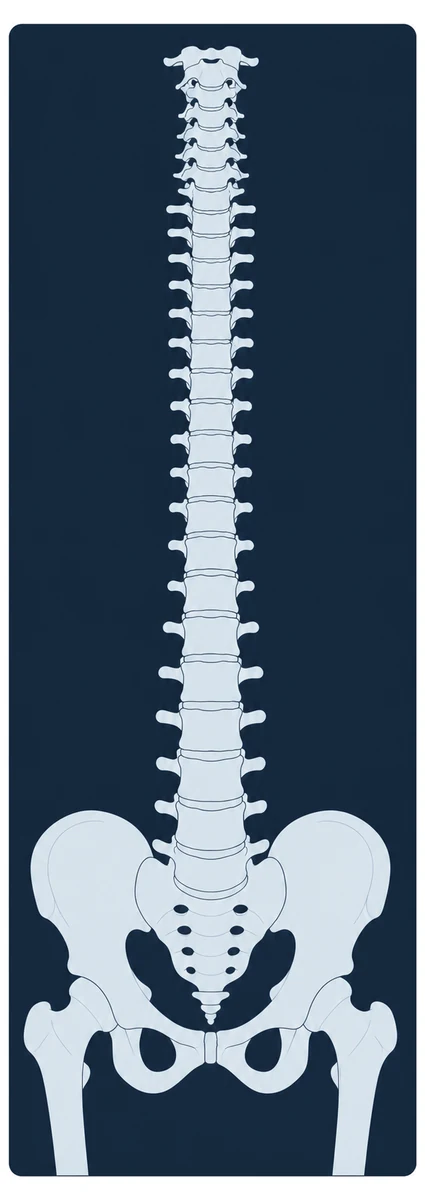
Your body has a normal temperature, a normal blood pressure, and a normal range for eyesight. Medicine measures against those normals every day, and nobody finds that strange. The spine has a normal too: head over shoulders, shoulders over pelvis, each segment carrying its share of the load.
When the spine moves away from that normal, we call it a structural shift. It is the primary problem, it is measurable on standing films, and it can obstruct the nerve pathways the spine exists to protect.
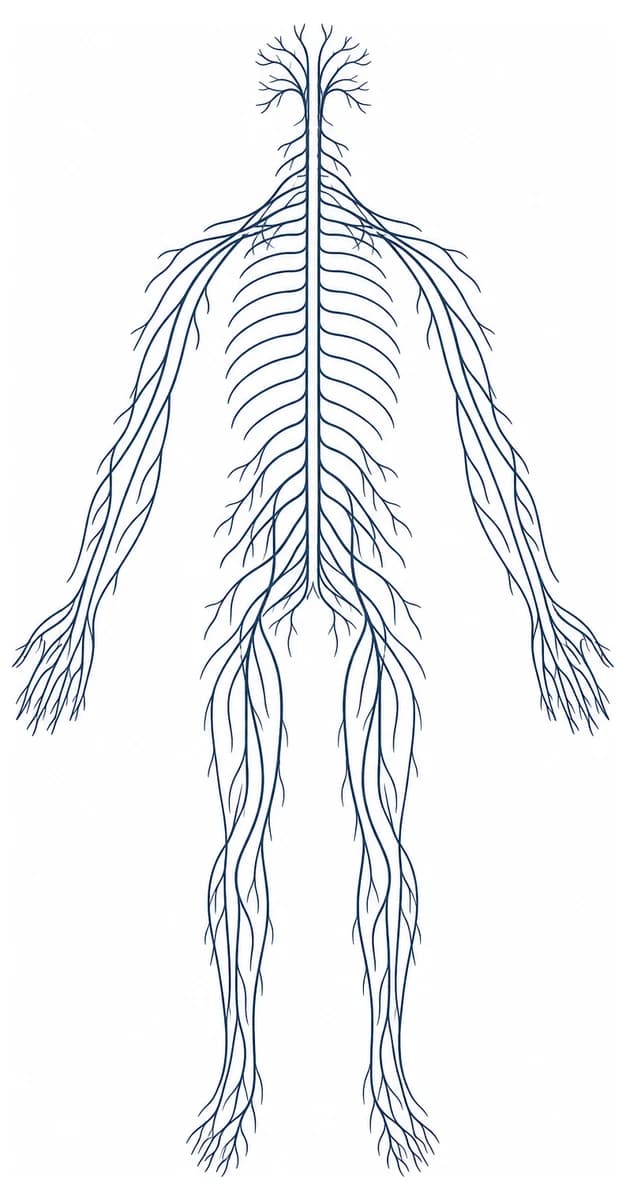
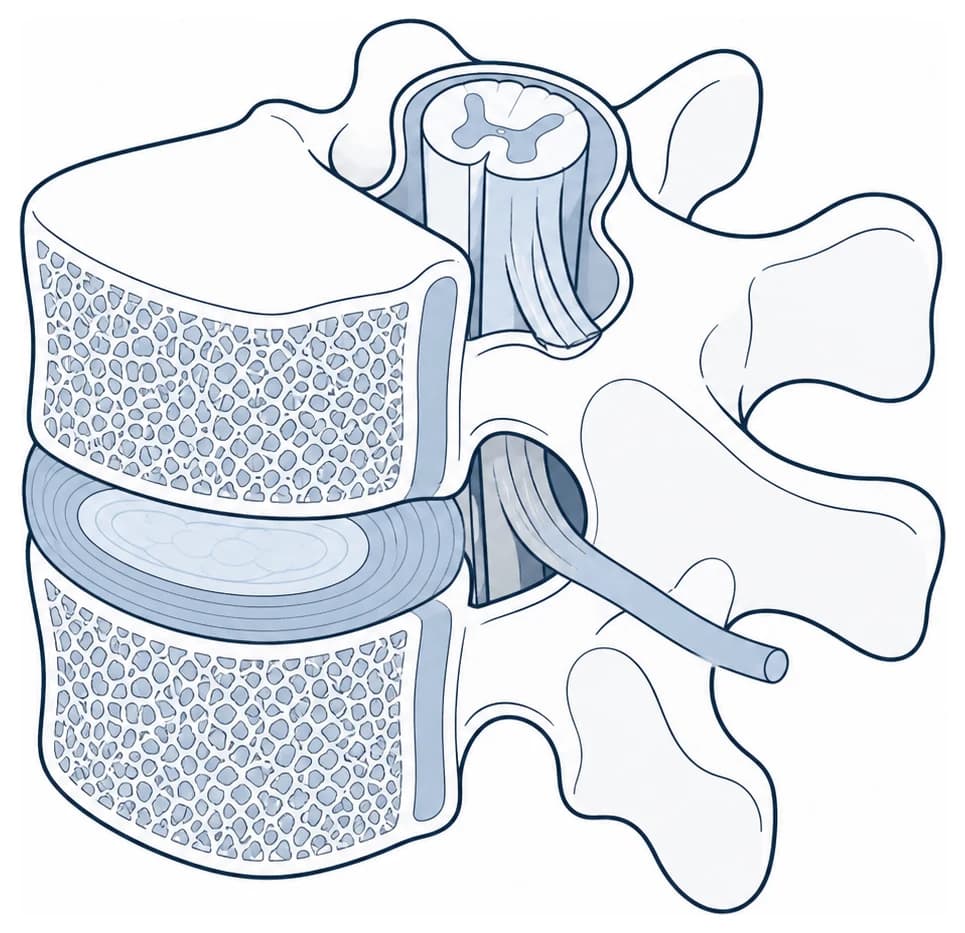
What normal actually means here
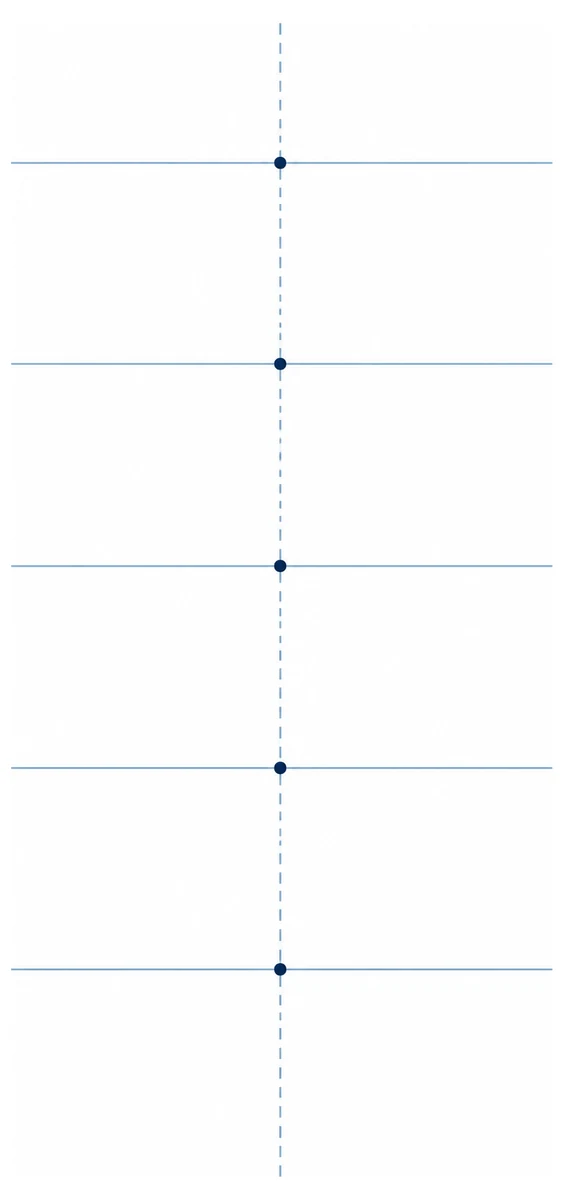
Ear over shoulder, shoulder over hip, hip over ankle. That vertical line is the reference every finding gets measured against, and a standing film is what shows whether your structure holds it under your own weight.
Secondary conditions, or what most people call symptoms
Neck pain, headaches, a pinched nerve, sciatica: these are usually secondary conditions. Secondary, because they are the result of something, and the something is frequently a structural shift. Chasing them one at a time is bandaging. Correcting the shift underneath them is the job of this practice, and it is a different question with a different answer.
If the idea of a structural shift is still abstract, four everyday pictures explain it better than another paragraph will.
How this differs from conventional chiropractic
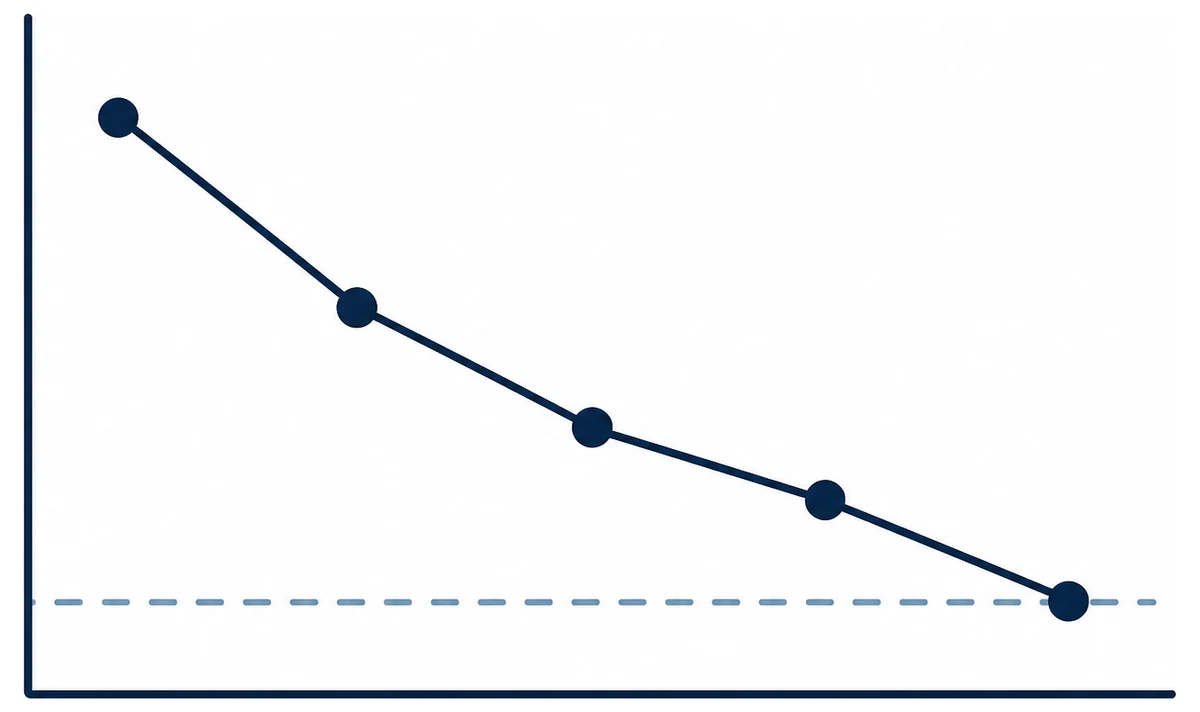
Traditional chiropractic uses general manipulation to relieve pain, reduce muscle tension, and increase range of motion. It generally does that job well and it helps a lot of people. Neuro-Structural Correction is aimed at a different target.
| Conventional care | Neuro-Structural Correction | |
|---|---|---|
| The goal | Relieve pain, reduce muscle tension, improve range of motion | Correct the structural shift underneath, aiming for relief that lasts and function that returns |
| What gets examined | The area that hurts | The whole structure, starting at the pelvis, with a five-part analysis |
| What gets adjusted | General manipulation, often the full spine | Only the segments the analysis identified, in the direction it indicated |
| How progress is judged | How you feel | How you feel plus objective retesting: thermography, palpation, films when indicated |
| The endpoint | Feeling better | A corrected, stable structure, then it is your choice how you maintain it |
The means
Finding the shift: the Gonstead analysis
Naming a structural shift is easy. Locating it precisely enough to correct it is the hard part, and it is what the Gonstead method was built for. Five layers of analysis, all five at every visit, because the answer changes between visits. Nothing gets adjusted on a hunch.

- 01
Visualization
You change into a gown that opens at the back, because a spine cannot be analyzed through a shirt. Dr. Chris is looking for swelling, edema, blemishes, and changes in skin color or muscle tone that line up with nerve irritation. He has also been reading your gait and posture since you walked in.
- 02
Instrumentation
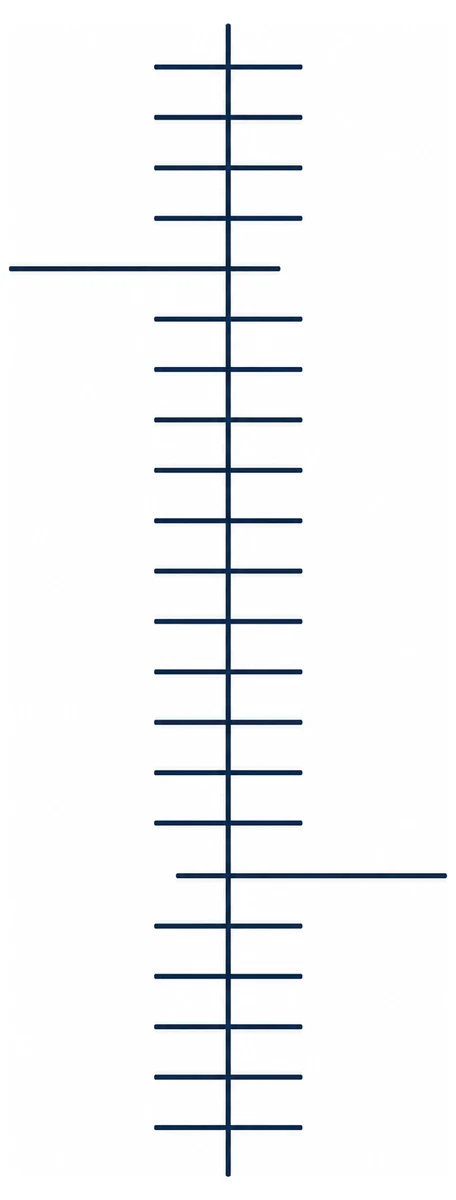
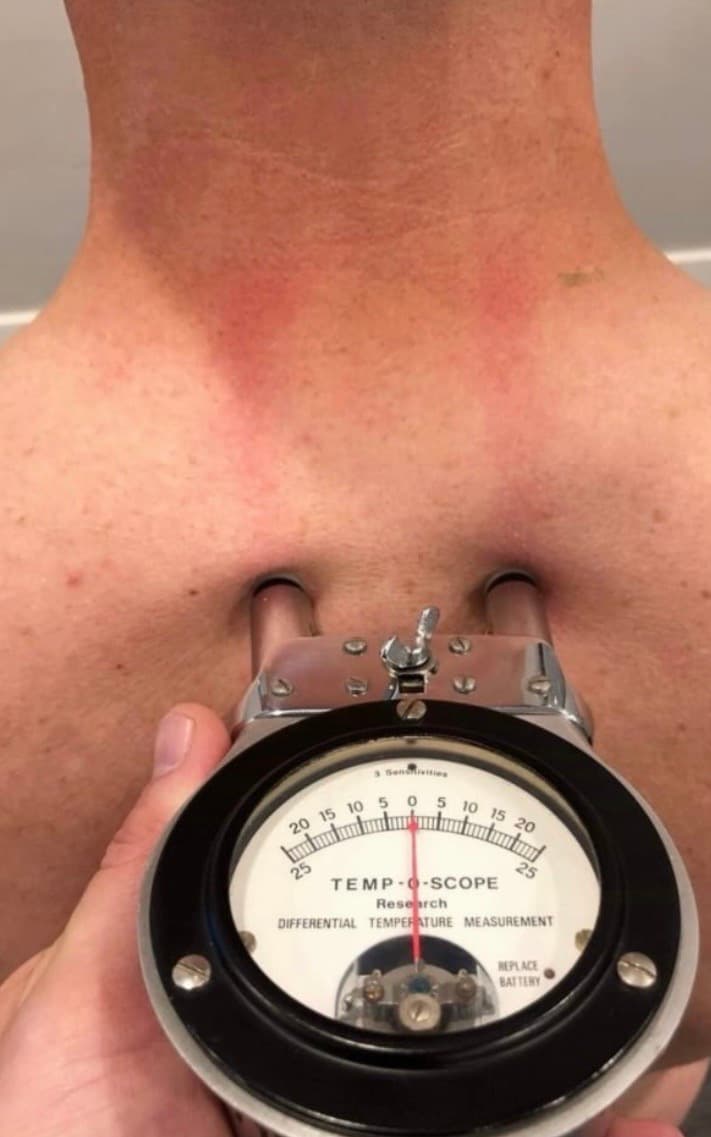
A dual-probe nervoscope is drawn down either side of the spine, comparing temperature left to right. Nerve irritation changes local blood flow, and blood flow changes heat, so a sharp break in the reading marks a level worth investigating. The readings get marked on your back.
- 03
Static palpation
Hands on the spine at rest, at the levels the instrument flagged. He is feeling for swelling, changes in muscle tone, tenderness, and the texture of the tissue around the joint.
- 04
Motion palpation
The same segments, but moving. This is what separates a joint that is genuinely restricted from one that is simply sore. It also tells him which direction the restriction runs, which decides the line of the adjustment.
- 05
X-ray analysis
Full-spine standing films, taken at one of three imaging centers just down the road. Standing matters: it shows what your spine does under your own body weight rather than lying down. Dr. Chris reviews them against his findings, and goes back and re-checks if the two do not agree.
Then the adjustment, and only then
The correction is delivered by hand, to the specific segments the analysis called for, in the specific direction it indicated. Segments that are moving correctly are left alone. That restraint is the point: adjusting a joint that did not need it creates a new problem rather than solving an old one.
The force is scaled to the person on the table. An infant needs a fraction of what an adult does, and a spine with existing degeneration is handled differently again.
During pregnancy: the Webster technique
Dr. Chris is Webster certified, a credential specific to chiropractic care during pregnancy. Same structural focus, with technique and table setup adapted for comfort, including positions that keep pressure off the belly.
Pregnancy care at Adapt LifeWhat “certified Gonstead chiropractor” actually means
The Gonstead Clinical Studies Society, or GCSS, is the nonprofit that certifies the skill level of doctors who say they use the Gonstead technique. Its formal credential is Diplomate status, and it asks for a minimum of five years practising the technique, at least 300 hours of GCSS-approved seminar instruction with 200 of those after graduation, and then a written and practical examination that includes performing ten adjustment set-ups.
It is worth knowing the difference between the credential and the practice of the technique. Plenty of doctors use Gonstead as their main approach without holding Diplomate status, and the letters after someone’s name tell you less than whether the five-part analysis actually happens at every visit.
Where Dr. Chris stands
He is not currently a GCSS Diplomate. His Doctor of Chiropractic is from Palmer College of Chiropractic, where the Gonstead system is part of the required technique curriculum, and he has completed more than 200 additional hours of Gonstead, GMI, and GCSS seminar training since graduating, including teaching the technique to other students. He has practiced since 2018 and is separately Webster certified for care during pregnancy.
If you are trying to judge whether any chiropractor’s Gonstead claim holds up, a Diplomate credential is one way to check, but it is not the only one. Two questions get you there faster: does every visit include the five-part analysis above, and does the adjustment stay limited to only the segments that analysis identifies. That process is what defines the technique, on the table, whether or not a Diplomate credential is attached to the doctor’s name.
Talk to Dr. Chris
The first conversation is about whether this is the right care for you. If it is not, he will tell you.
Would rather he called you? Leave your number
$50 off your first visit. Booking online? Mention where you found us at check in and it comes off your first visit.