Understanding your spine
What is a structural shift?
Your spine has a normal, the same way your blood pressure does. A structural shift is a move away from that normal, and it is the problem Dr. Chris is looking for before anything gets adjusted.
There is a normal
Your body has a normal temperature, a normal blood pressure, and a normal range for eyesight. Medicine measures against those every day and nobody finds it strange. The spine has a normal too, and it is just as measurable.
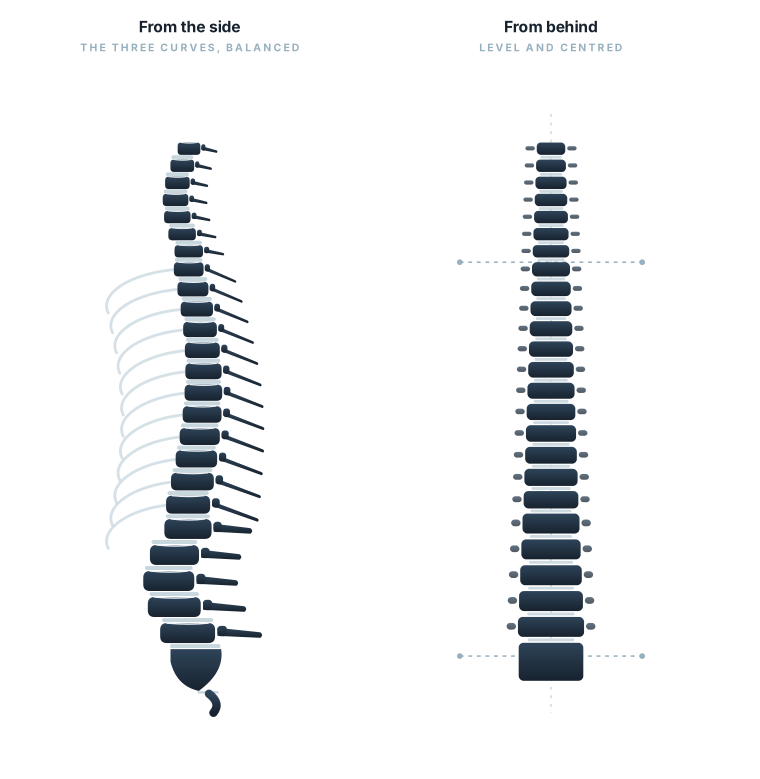
From the side, the head should sit over the shoulders and the shoulders over the pelvis. From behind, the spine should run up the midline with shoulders and hips level. Both views matter, because a shift can hide in whichever one you are not looking at.
Fig. 01 · Normal structure, two views
What a shift looks like
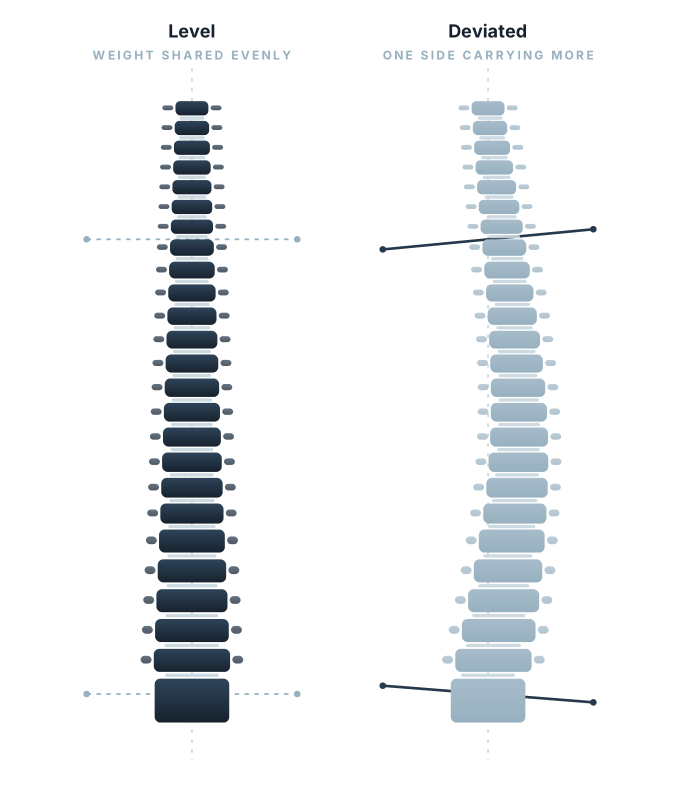
A shift is rarely dramatic to look at. From behind it can be one shoulder riding higher than the other and a pelvis that is no longer level. From the side it is more often the head carried forward, which the rest of the spine then has to counterbalance.
Fig. 02 · From behind, level and deviated
What it does to the structure itself
A shift changes how load moves through the spine. These are the findings Dr. Chris looks for on examination and on film. Every spine is different, so what shows up, and how much, varies from person to person:
- 1The head sitting forward of where it should over the shoulders
- 2Extra wear building up in a vertebra
- 3Pressure on a nerve where it exits the spine
- 4Muscles working overtime to hold up a structure that is off balance
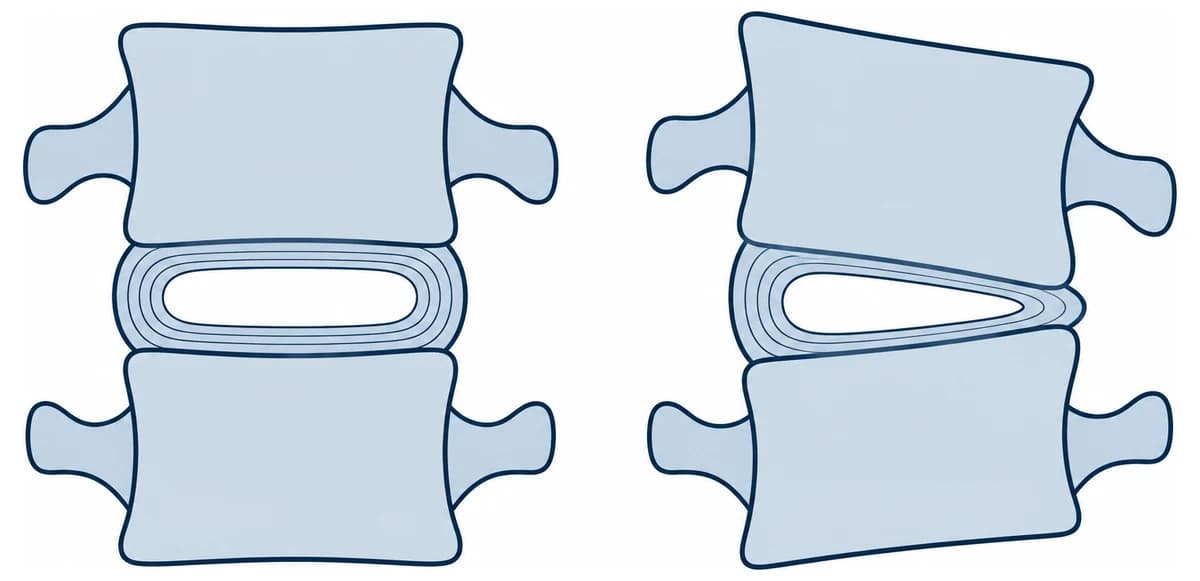
- 5A disc taking uneven compression
Then come the secondary conditions
Neck pain, headaches, a hand that goes numb, sciatica. Most people call these symptoms. In this model they are secondary conditions, because they are frequently the result of something else, and that something is often a structural shift. It is also why two people can have a similar shift and feel very different amounts of discomfort, or none at all.
What we help withEight ways to picture it
These are analogies, not physiology. None of them are how a spine actually works. All of them are true to how structure behaves, which is the part worth understanding before your first visit.
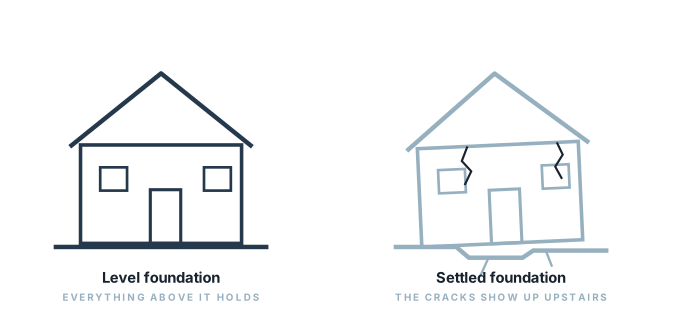
A building is only as strong as its foundation
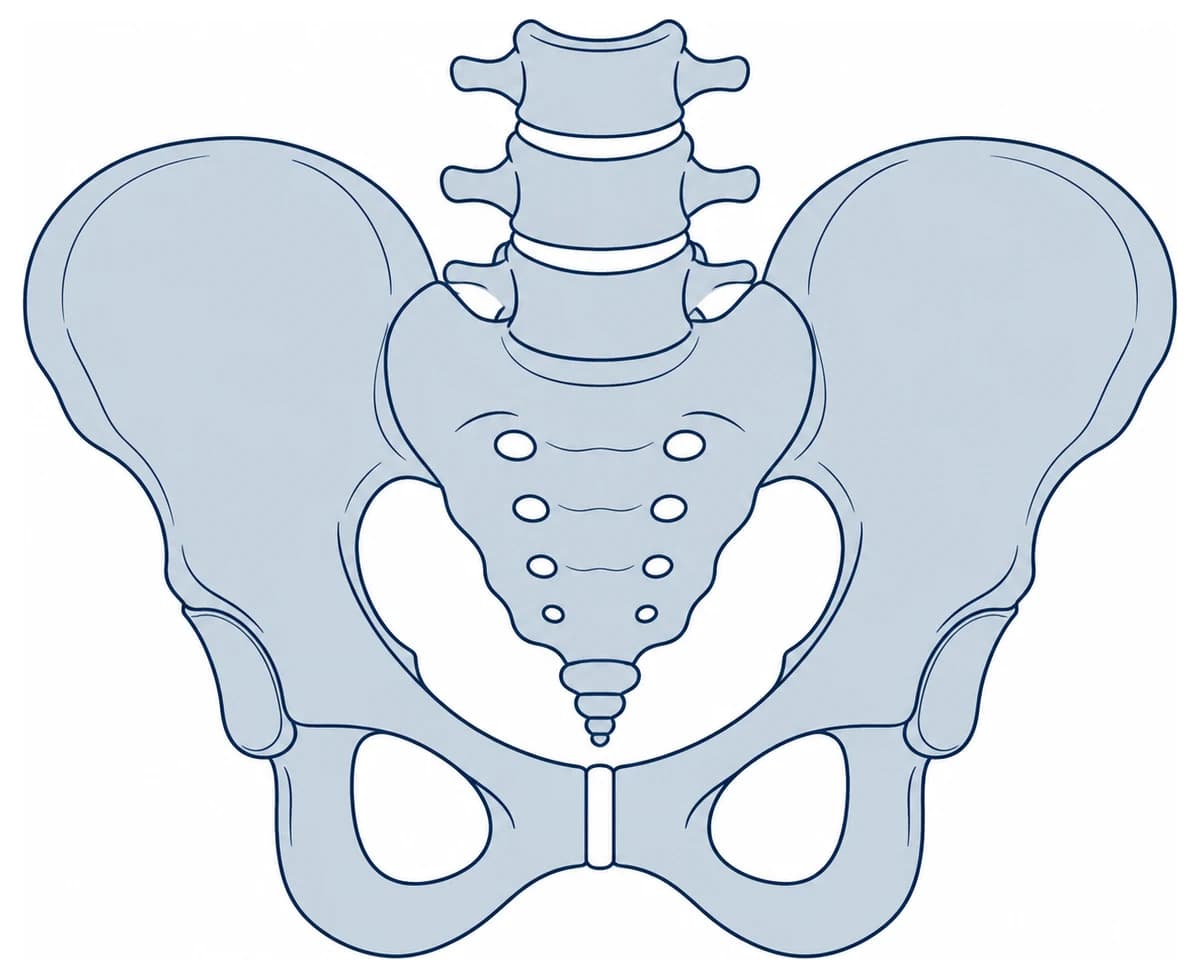
When a foundation settles, the cracks show up in the walls upstairs. Patching plaster changes nothing while the ground underneath is still moving. Your pelvis is the foundation, which is why the analysis starts there.
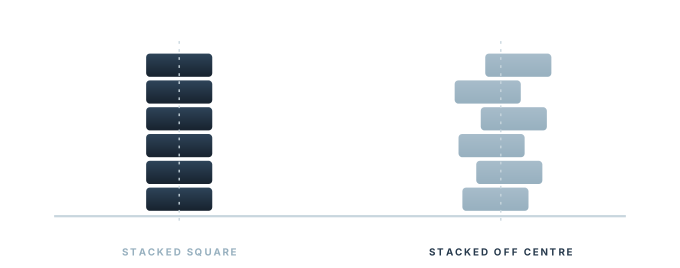
Stacked square, or stacked off centre
A column of blocks stacked squarely holds its own weight all day. Offset the same blocks and every one below is fighting to keep the stack up. Vertebrae work the same way.
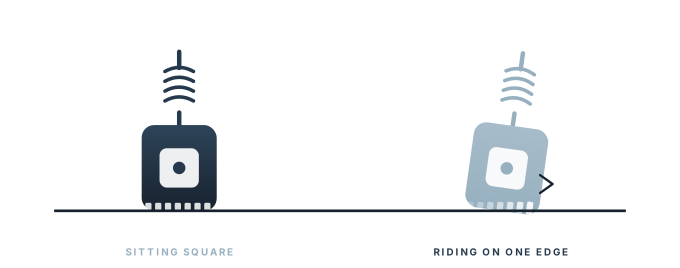
Alignment shows up in the wear
A wheel sitting square wears evenly across the tread. Knock the alignment out and one edge does all the work and wears out early. Nobody blames the tire, they fix the alignment.
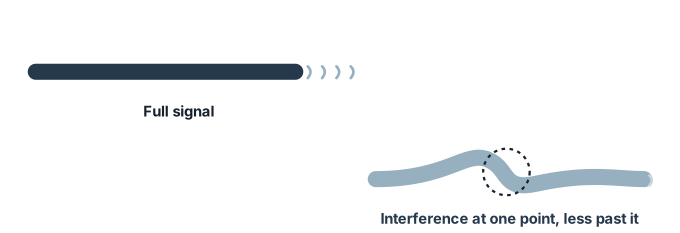
A kink in the line
Your nerve system carries the signal that runs every part of you. A structural shift can press on that line the way a kink presses on a hose, and everything downstream of it gets less than it should.
So how do you find one?
Naming a shift is easy. Locating it precisely enough to correct it is the hard part, and it is what the Gonstead method was built for: five layers of analysis at every visit, plus standing films that show what your spine does under your own body weight rather than lying down.
The goal of care here is a corrected, stable structure, so that relief has a reason to hold rather than needing to be repeated. What happens after correction is your call.
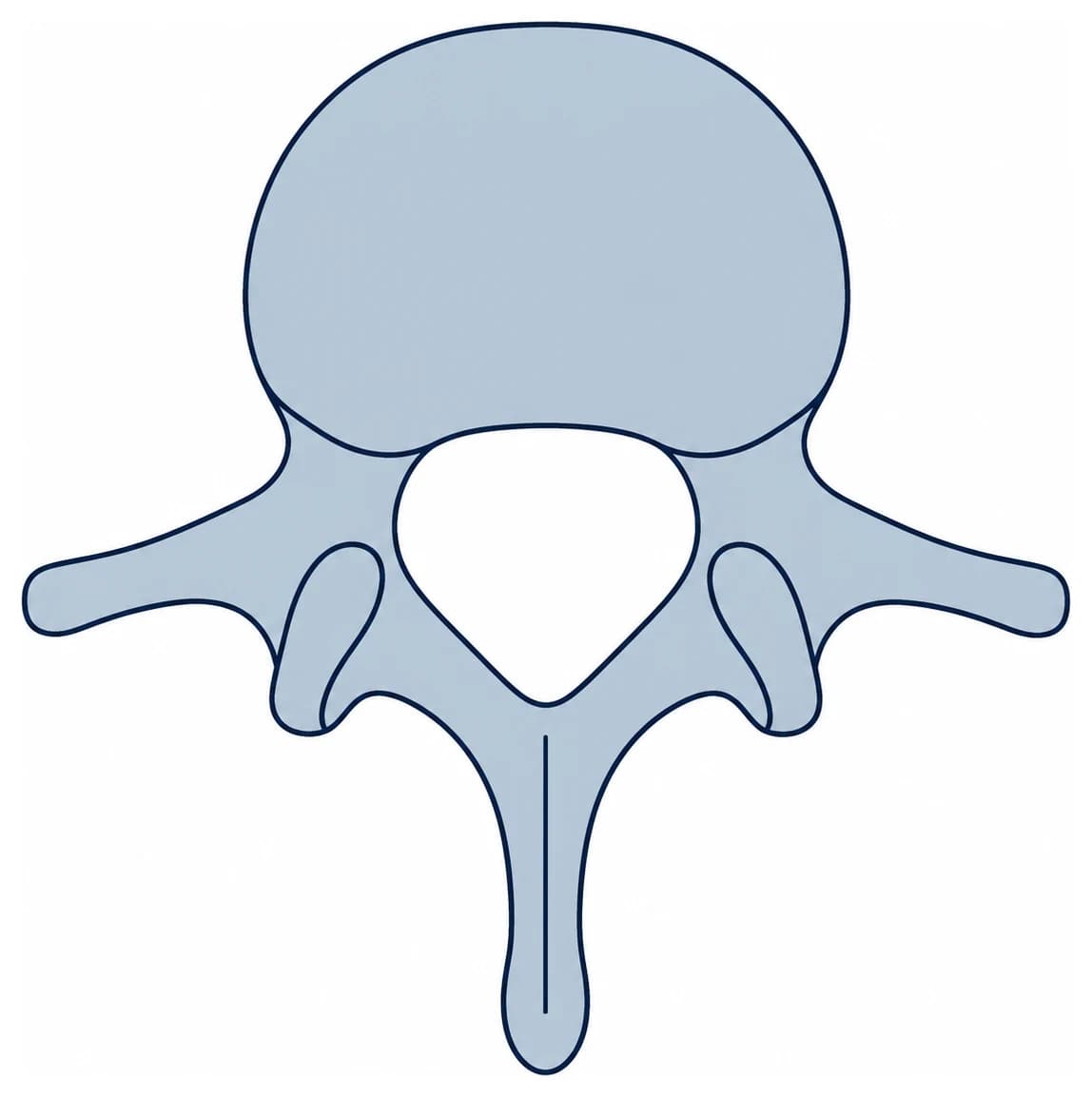
What is actually being protected
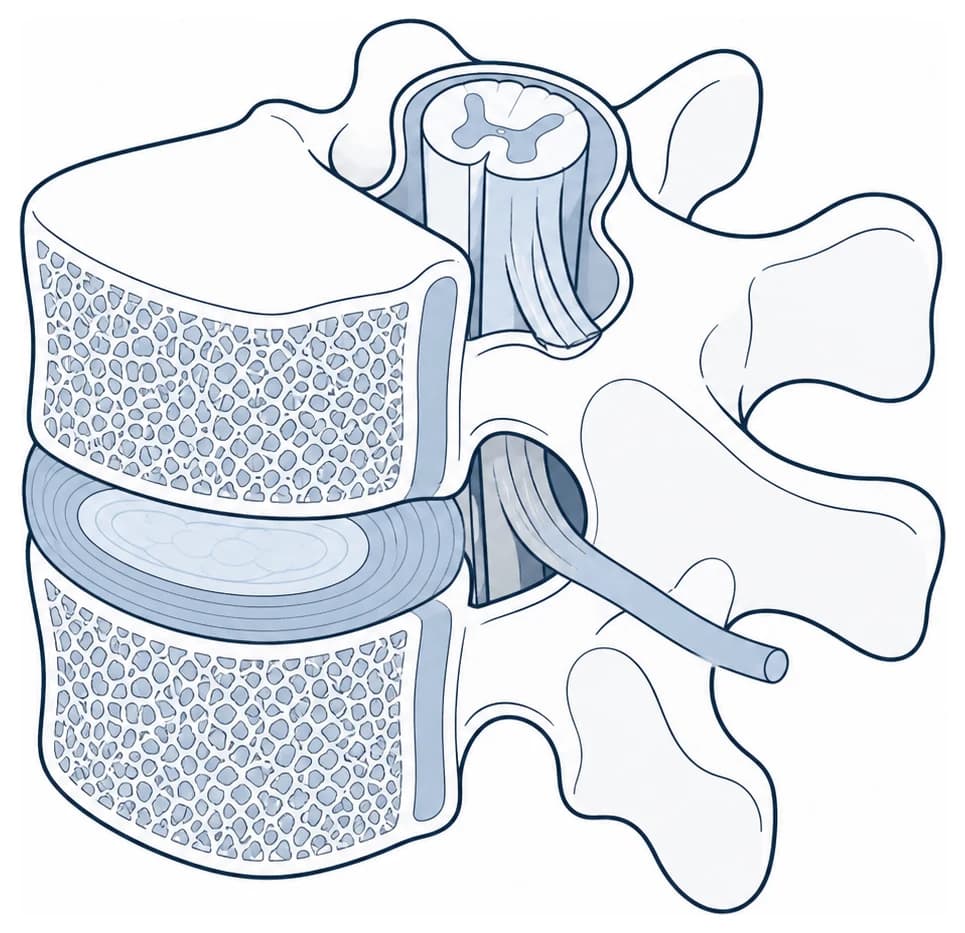
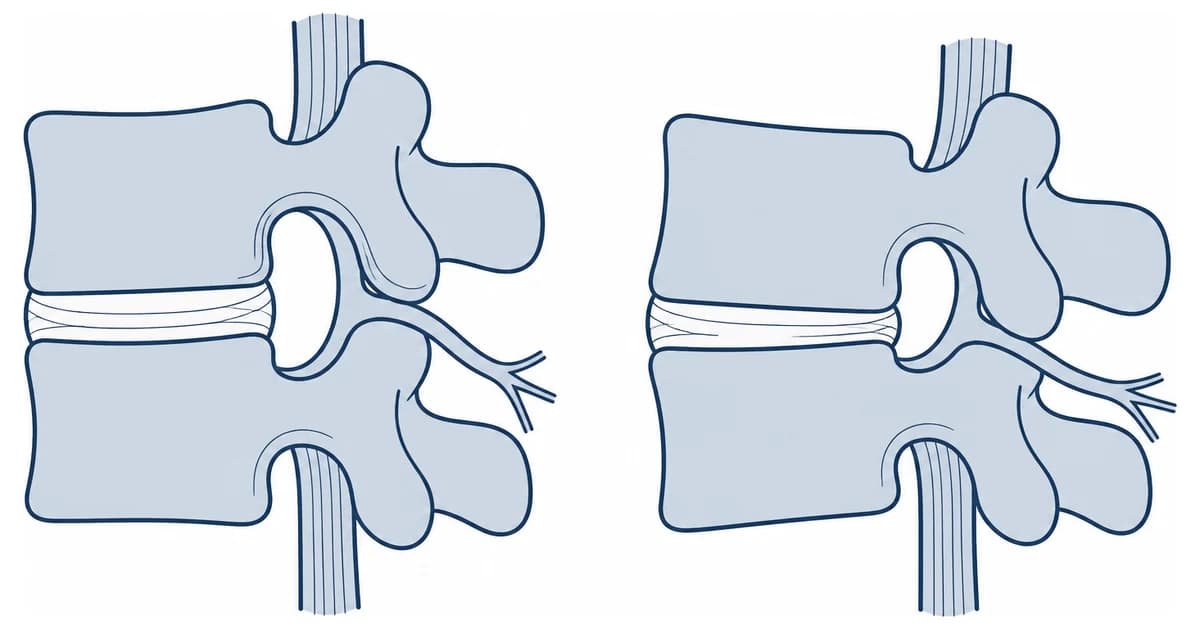
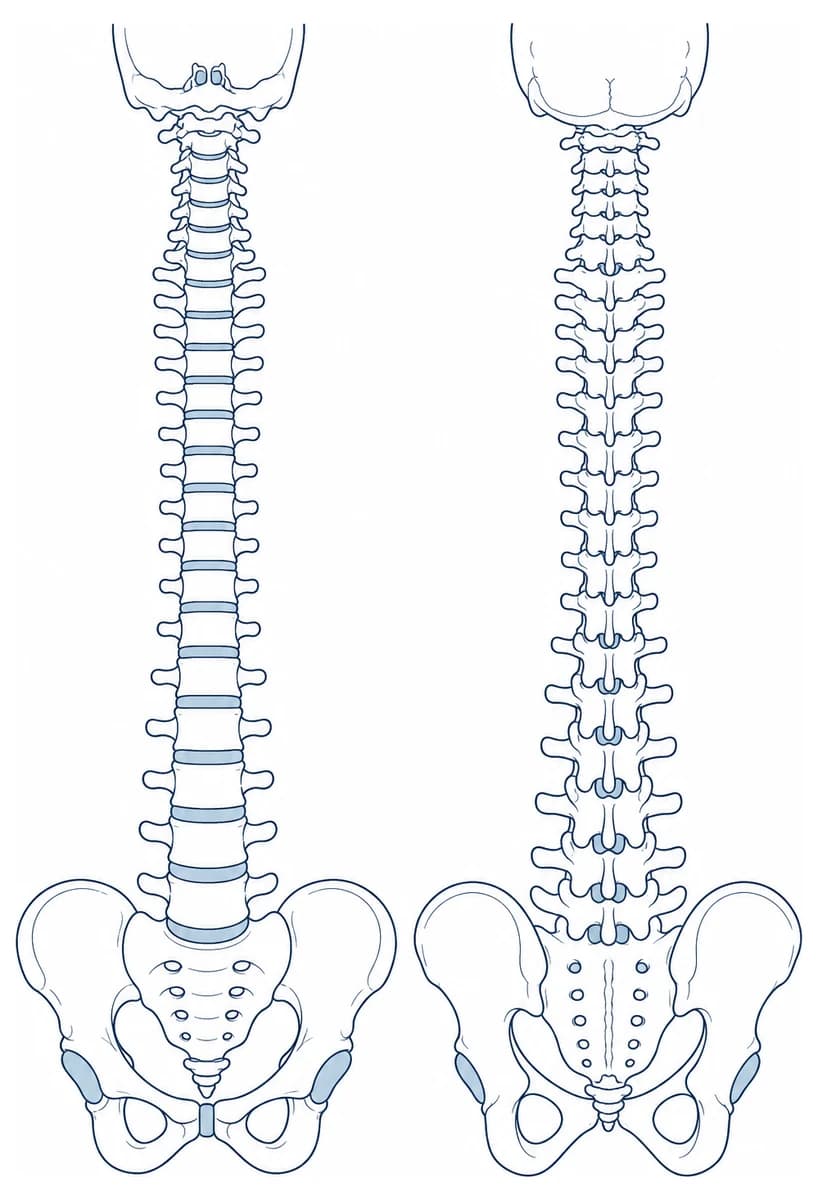
Three pictures explain most of it. A vertebra is a ring, not a block. Nerves leave through gaps at the sides. Those gaps change shape when the structure above and below them changes.
Want to know if you have one?
The first conversation is about whether this is the right care for you. If it is not, he will tell you.
Would rather he called you? Leave your number
$50 off your first visit. Booking online? Mention where you found us at check in and it comes off your first visit.