
How it usually shows up
- Tightness across the top of the shoulders that never fully lets go
- Turning your head noticeably further one way than the other
- Pain that starts at the base of the skull and climbs
- Numbness, pins and needles, or weakness running into the arm or hand
What Dr. Chris actually does about it
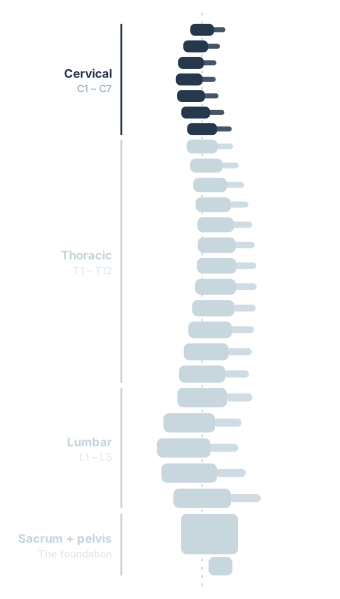
The cervical spine gets the same five layers of analysis as everywhere else, and the nervoscope reading matters here more than most places because small temperature breaks in the neck are meaningful. Dr. Chris checks how each segment moves rather than assuming the sore level is the involved one, and he confirms against your films before adjusting. Specific, seated or side-posture, by hand, and nothing else gets moved.
A cervical adjustment done this way looks different from a general neck crack. Dr. Chris is not moving the whole neck through a broad range of motion; he is contacting one specific vertebra and delivering the correction in one specific line the analysis and films point to, then rechecking with the nervoscope and by hand before deciding whether another segment needs attention. If your history, exam, or films raise anything that makes cervical adjustment a bad idea for you, he says so and refers out instead of adjusting anyway.
Because the neck carries the head all day, a segment that has been restricted for a while often shows up on the nervoscope at the same level visit after visit until it actually holds position, which is one reason a short course of care is common even after the first adjustment changes how the neck moves. Dr. Chris rechecks the same handful of data points, temperature, motion, tenderness, and film, at intervals rather than going by how the neck feels on a given day, since what you report and what the segment is actually doing are not always the same thing.

Questions people ask
- Does chiropractic help neck pain?
- Chiropractic care can help neck pain when the cause is mechanical, meaning a joint in the cervical spine is not moving the way it should. It does not help every kind of neck pain, since tension, whiplash, arthritis, and nerve irritation are not all the same problem structurally. An exam, including films at Adapt Life, is what determines whether an adjustment makes sense for your case.
- Can a chiropractor make neck pain worse, or cause a stroke?
- It is possible for pain to feel worse for a short time, though that is not common when care starts with a real exam and films. There is also a separate, well-known question about neck adjustments and stroke: a small number of strokes from tears in the arteries of the neck have happened close in time to a neck manipulation, and researchers still debate whether the manipulation caused the tear or whether the person already had one that was producing the neck pain and headache that brought them in. Dr. Chris's Gonstead adjustments are delivered to one specific segment in one specific direction that the analysis and films indicate, not a broad, high-velocity rotational sweep, and he will not adjust a neck when the history, exam, or films raise a red flag.
- Is it normal to hear a cracking or popping sound when a chiropractor adjusts your neck?
- Yes. The sound is gas releasing from the joint as it moves, the same thing that happens when you crack your knuckles, and it is not a sign of anything grinding or breaking. Some Gonstead adjustments produce an audible release and some do not, and either way does not tell you whether the adjustment worked. What matters is whether the specific segment the analysis identified actually moved, not whether you heard something.
- How long does it take for chiropractic to help neck pain?
- There is no set timeline, because it depends on what the exam and films find and how long the segment has been restricted. Some people notice a change within the first few visits, and others take longer, particularly with longstanding postural strain or an old injury. Dr. Chris tells you what to expect for your case after the exam rather than quoting a general number.
- Chiropractor or physical therapy, which is better for neck pain?
- Both can help, and they work differently. A chiropractic adjustment restores motion to a joint that is not moving correctly, while physical therapy builds the strength and flexibility around the neck that helps keep a problem from coming back. Many people use both, seeing a chiropractor for the joint restriction and a physical therapist for the muscle and posture work; Dr. Chris does not provide physical therapy himself and will say plainly if your case would benefit from it alongside or instead of adjustment.
- Do I need an X-ray before a chiropractor adjusts my neck?
- At Adapt Life, yes. Films are taken on the first visit for every case that is not pregnant, and the neck is not adjusted until Dr. Chris has reviewed them. Full-spine standing X-rays show which direction a segment has actually shifted, which sets the line of correction, and they also rule out things that would make an adjustment inappropriate. Not every chiropractic office images before adjusting, but this one does.
- When is neck pain a medical emergency instead of a chiropractic case?
- Go to urgent care or an ER, not a chiropractor's office, for neck pain with a sudden severe headache unlike any before, fever with neck stiffness, numbness or weakness spreading into both arms or both legs, loss of coordination or balance, slurred speech or vision changes, or neck pain that started after a car accident, fall, or other significant trauma. Those can point to a spinal cord issue, an infection, or a vascular problem that needs medical evaluation first. Outside of those signs, neck pain is generally reasonable to have evaluated by a chiropractor.