
How it usually shows up
- Stiffness that is worst first thing and eases as you move
- Joints that ache with weather or after inactivity
- A gradual loss of range you only notice in specific movements
- Being told there is degeneration on a previous scan
What Dr. Chris actually does about it
Films are central here, because arthritic change is visible on them and it dictates what is appropriate. Dr. Chris adapts both the analysis and the force of the adjustment to what the joint will actually tolerate, and focuses on restoring motion where motion is still available rather than forcing a segment that has fused.
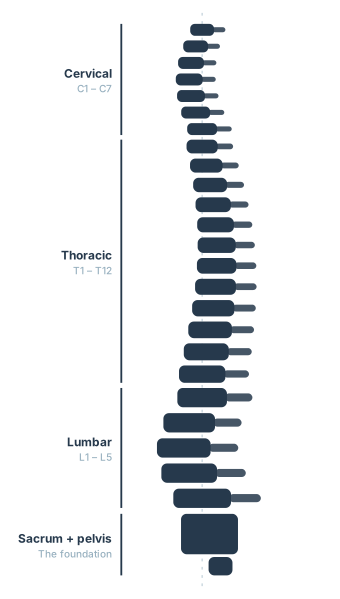
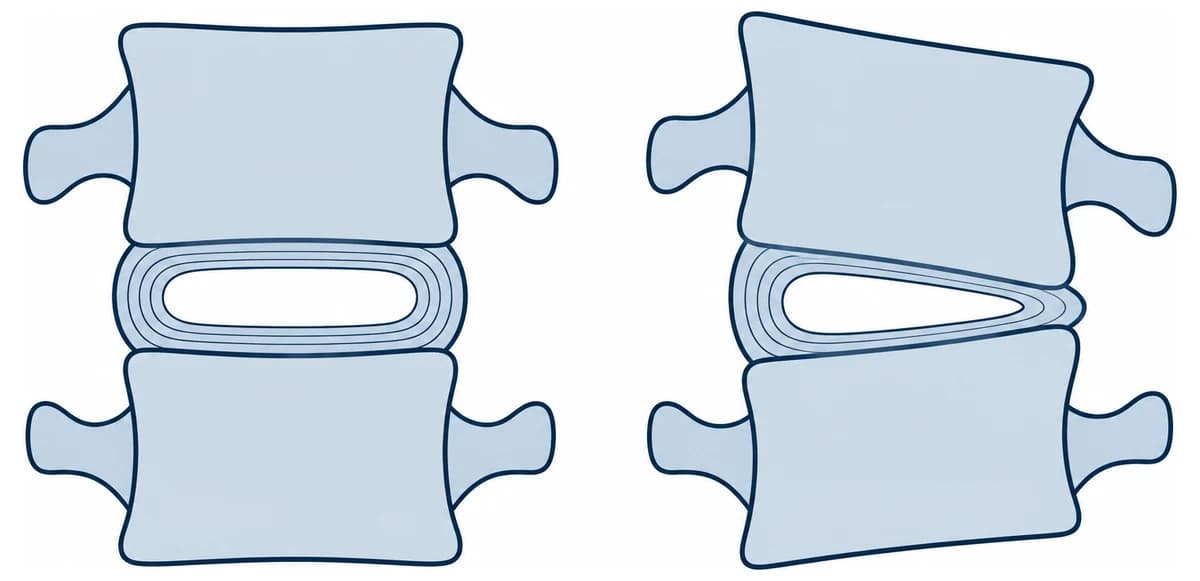
When someone comes in with arthritis-related pain, Dr. Chris runs the same five-part Gonstead analysis used at every visit: visualization, instrumentation with the dual-probe nervoscope, static and motion palpation, and a full-spine standing X-ray. The X-ray is where degenerative changes such as joint space narrowing, bone spurs, or disc thinning become visible, and it also shows how the spine is aligned and how weight is being carried through it overall. Arthritis itself isn't something an adjustment reverses. What the analysis looks for is a structural shift elsewhere in the spine that may be adding extra mechanical stress to an already arthritic level. Only the segments the analysis identifies get adjusted, in the direction it indicates.
This matters most for the difference between osteoarthritis and inflammatory forms like rheumatoid or psoriatic arthritis. Wear-and-tear changes at a joint don't rule someone out from a Gonstead evaluation. But if a joint is actively inflamed, swollen, or part of a diagnosed autoimmune condition, Dr. Chris factors that into which segments get adjusted that day, rather than applying a fixed routine regardless of what the joint is doing. Anyone managing arthritis with a rheumatologist or other physician should keep that relationship active; care here is meant to work alongside it.
Questions people ask
- Can a chiropractor help with arthritis?
- Chiropractic adjustments cannot cure or reverse arthritis, since the joint changes involved are permanent. What an adjustment focuses on is how the rest of the spine is moving and loading, since a stiff or shifted segment nearby can add extra stress to an arthritic joint. At Adapt Life, the five-part Gonstead analysis, including a full-spine standing X-ray, is used to find those segments, and only the ones the analysis identifies get adjusted.
- Can a chiropractor make arthritis worse?
- Yes, that's possible, particularly with inflammatory types like rheumatoid arthritis during an active flare. Adjusting a joint that is actively swollen or inflamed can increase pain, and some autoimmune arthritis medications thin bone in ways that raise fracture risk under pressure. Osteoarthritis, the wear-and-tear kind, is generally considered safe to work with, but any plan should account for which type of arthritis is present and whether it's currently flaring.
- Does an X-ray show arthritis in the spine?
- Yes. Degenerative changes such as narrowed disc space, bone spurs, and joint wear are visible on X-ray, and that's part of what the full-spine standing X-ray in a Gonstead analysis looks for. It also shows how the spine is aligned overall, not just at the arthritic level. An X-ray taken at a chiropractic office is not a substitute for the bloodwork or imaging a rheumatologist would order to diagnose an inflammatory condition like rheumatoid arthritis.
- Is chiropractic care or physical therapy better for arthritis?
- Neither is universally better; they do different jobs and often work well together. Physical therapy builds strength and mobility around a specific arthritic joint, like a knee or shoulder, through targeted exercise, which is often the first approach people try for a single problem joint. Chiropractic care built around full-spine analysis is more focused on how the spine's alignment and motion may be adding strain elsewhere in the body. Many people use both without any conflict.
- Can chiropractic cure or reverse arthritis?
- No. Arthritis involves permanent changes to joint cartilage and bone, and no adjustment, exercise, or supplement reverses that. Care at Adapt Life is aimed at identifying and adjusting spinal segments that the Gonstead analysis finds are adding mechanical stress, not at reversing the arthritis itself. Anyone told otherwise by a provider should ask exactly what's being promised.
- Is chiropractic safe for rheumatoid arthritis?
- It can be, but it needs more caution than osteoarthritis does. Rheumatoid arthritis is autoimmune, so joints can be actively inflamed, and some medications used to treat it affect bone density. Dr. Chris factors an RA diagnosis, current flare status, and any bone health concerns into which segments get adjusted and how. Coordination with a rheumatologist should stay in place, and the specifics get worked out during an in-person exam, not from a website.
- When is joint pain a medical emergency instead of something to bring to a chiropractor?
- A joint that is hot, red, significantly swollen, and paired with fever needs urgent medical care, not an adjustment, since that combination can signal a joint infection. The same goes for sudden severe joint pain after an injury, a joint that looks deformed, or an inability to put any weight on it. Unexplained weight loss alongside joint pain, or pain that wakes someone up at night and isn't helped by rest or changing position, should also be checked by a physician first. Adapt Life's five-part analysis screens for signs like these before any adjustment is made.