
How it usually shows up
- A deep ache that worsens after sitting, driving, or a long day on your feet
- A catch or stab when you bend, twist, or stand up from a chair
- Stiffness that is worst in the first hour of the morning
- Pain that shifts side to side, or moves down into the hip or glute
What Dr. Chris actually does about it
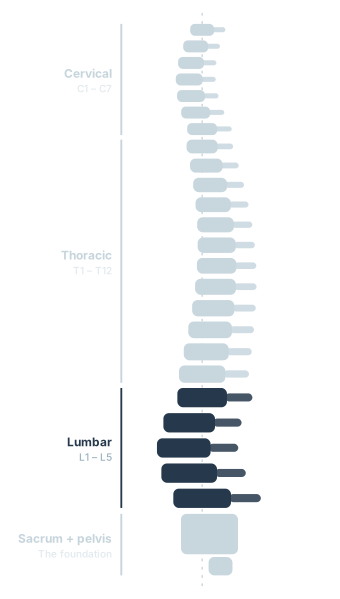
Gonstead work starts at the pelvis, because the pelvis is the foundation the rest of the spine sits on. Dr. Chris runs the full analysis before touching anything: posture and gait, visualization of the skin over the area, a nervoscope pass reading temperature side to side down the spine, then static and motion palpation to feel which segments are swollen, tender, and genuinely restricted. Full-spine films confirm what is out of position and in which direction. Only then does he adjust, by hand, and only the levels the analysis called for.
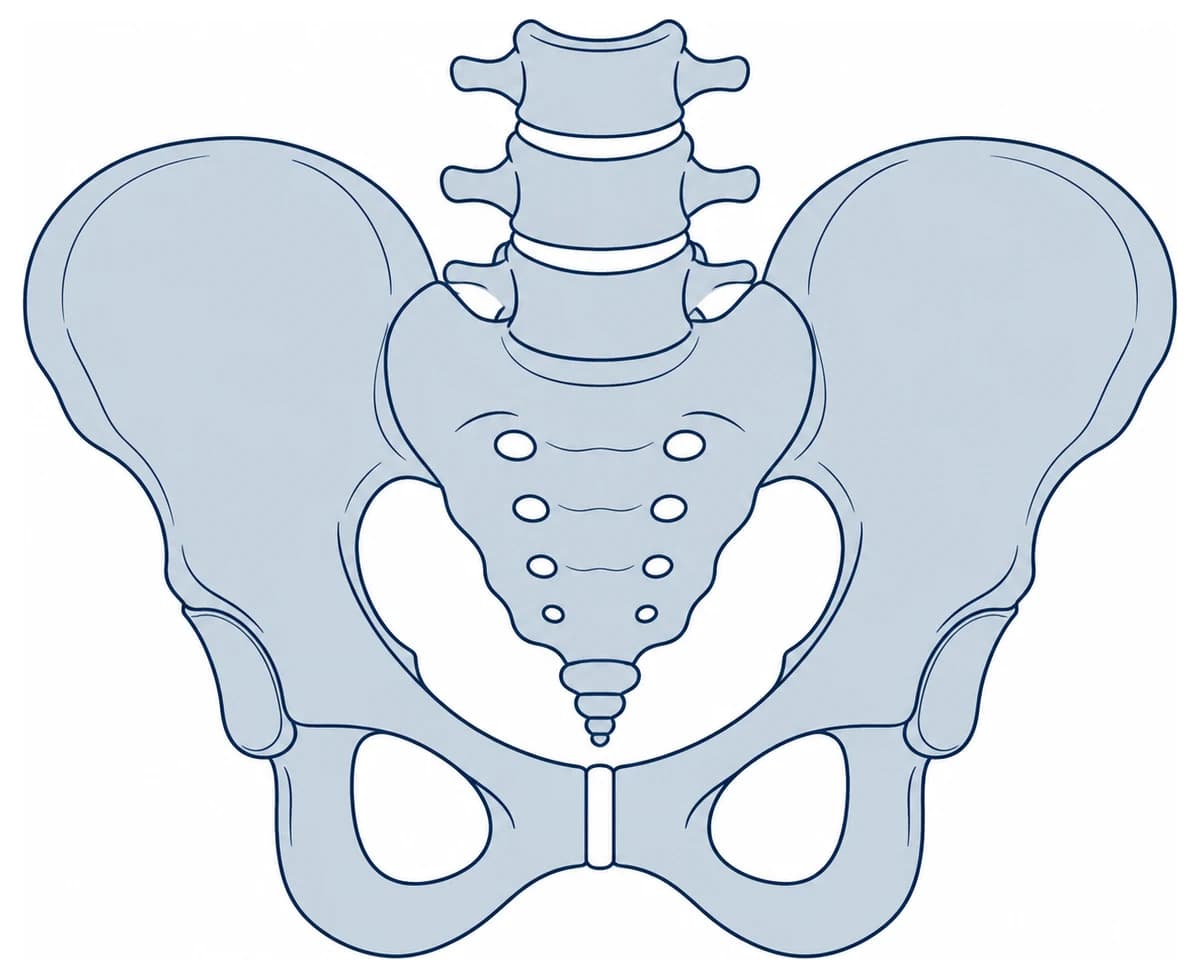
Low back pain has more than one possible source, and a joint, a disc, or the sacroiliac area of the pelvis can all produce a similar ache in roughly the same spot. That is one reason the exam does not stop at the place that is sore. Because the pelvis is the foundation the lumbar spine sits on, an unlevel pelvis or a restricted sacroiliac joint can load one lumbar level more than the others and can keep it irritated even after a flare eases on its own.
Because a herniated or bulging disc can be part of a low back case, Dr. Chris confirms what the disc and each segment are doing on film before adjusting anything, and the line of correction is chosen to match the direction the segment has actually moved, based on what the films and analysis show for that specific segment. If what he finds points to something beyond what chiropractic addresses, he says so and refers out instead of proceeding with an adjustment.
Questions people ask
- Does chiropractic help with low back pain?
- Chiropractic care can help low back pain when the cause is mechanical, meaning a joint, disc, or the pelvis is not moving or bearing weight the way it should. Low back pain also has causes that are not structural, including issues with an internal organ, so an exam is what determines whether adjustment is a reasonable option for your case. Films taken on the first visit here are part of ruling that in or out before any adjustment is delivered.
- How long does it take for a chiropractor to help low back pain?
- There is no set timeline, because it depends on what the exam and films find and how long the segment has been irritated. Some people notice a change within the first few visits, and others take longer, particularly when a disc is involved or the pain has been building for years. Dr. Chris tells you what to expect for your case after the exam rather than quoting a general number.
- Should I see a chiropractor or a physical therapist for low back pain?
- Chiropractic, including the Gonstead method used here, centers on analyzing and adjusting a specific spinal segment that is restricted or out of position. Physical therapy centers on exercise, movement retraining, and building strength around the area, usually across a series of visits over time. Many people use both, and which one fits first often comes down to whether your case needs joint-specific correction, a strengthening program, or a combination.
- Is it safe to see a chiropractor for low back pain if I have a herniated disc?
- It depends on how the disc is behaving, not just whether a herniation shows up on a scan. A forceful, generic adjustment during an acute flare can aggravate a disc that has already ruptured, which is why films and a direction-specific analysis happen before any adjustment here. Some disc cases need imaging beyond plain film or a surgical opinion, and Dr. Chris will point that out before recommending any adjustment.
- How many chiropractic visits does low back pain usually take?
- That depends on the case, and Dr. Chris does not quote a number before the exam. A recent strain from a single incident is a different problem than pain that has been building for years, and the two are not treated on the same schedule. What the exam and films find on your first visit sets your plan.
- Can a chiropractor make low back pain worse?
- It is possible. The main risk is adjusting a segment without first ruling out a large disc herniation, a fracture, or other findings that would change what is appropriate, which is why films and a full exam happen before care begins here rather than after. A brief increase in soreness during the first few visits can also happen and is not the same thing as being made worse.
- When is low back pain a medical emergency instead of a chiropractic case?
- Go to urgent care or an ER, not a chiropractor's office, if you have new loss of bladder or bowel control, numbness in the groin or inner thighs, leg weakness that keeps getting worse, or back pain that started after a serious fall or accident. Fever, unexplained weight loss, or pain that is worse at night and does not ease with rest also need medical evaluation first, since those can point to infection or another issue that has nothing to do with spinal structure. Outside of those signs, low back pain is generally reasonable to have evaluated by a chiropractor.