
How it usually shows up
- Pain that starts at the base of the skull and wraps forward
- A band of pressure across the forehead or behind one eye
- Headaches that arrive at the end of a desk day rather than the start
- Reaching for something over the counter more often than you would like
What Dr. Chris actually does about it
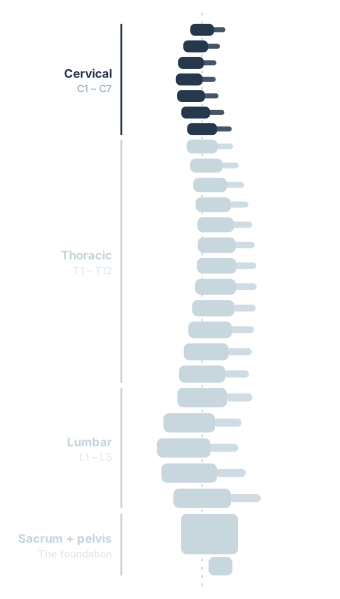
Dr. Chris analyzes the upper cervical spine specifically, along with how the rest of the spine is loading beneath it, since the head sits on top of everything below. The nervoscope pass and motion palpation identify whether a segment in the neck is genuinely restricted, and films confirm alignment before any adjustment is delivered.
For headaches, the five-part Gonstead analysis pays close attention to the upper neck, including the area where the skull meets the top of the spine, since irritation to nerves in that region can be a structural contributor to head pain. The dual-probe nervoscope reading lets Dr. Chris compare temperature side to side along the spine, which can flag an area of nerve irritation, while the full-spine X-ray shows whether the shift is limited to the neck or connected to a misalignment lower in the spine that is changing how the neck holds itself. Headaches are treated as a secondary condition rather than a problem to work on directly. Instead of working on the head or scalp itself, Dr. Chris looks for where in the spine the structural shift actually is and adjusts only that segment, in the direction the analysis indicates.
Because migraines and some other headache types involve more than spinal mechanics, Dr. Chris does not treat every headache the same way. If the analysis does not point to a clear structural cause, or if your headache includes any of the red-flag symptoms, he will say so directly rather than adjusting anyway, and he may suggest you also see a medical doctor. Progress is tracked visit to visit using the same nervoscope and palpation findings taken at your first exam, not a fixed number of sessions decided ahead of time.
Questions people ask
- Can a chiropractor help with headaches?
- Many headaches, especially ones that come with neck stiffness or tension at the base of the skull, are connected to how the neck and upper spine are moving and sitting. At Adapt Life, Dr. Chris runs the five-part Gonstead analysis at every visit, visualization, the nervoscope, static and motion palpation, and a full-spine X-ray, to check whether a structural shift in your spine is part of what is driving your headaches. If the analysis finds a misaligned segment, he adjusts only that segment, in the direction the analysis points to. Not every headache has a spinal cause, so this approach is aimed at headaches tied to neck and upper back tension rather than every type of head pain.
- Can chiropractic care help with migraines, or only tension headaches?
- Tension headaches and headaches that start in the neck (called cervicogenic headaches) are more directly tied to spinal mechanics than migraines are. Migraines involve changes in blood vessels and nerves inside the brain itself, not just the neck and upper back, so a neck adjustment does not address the whole picture the way it can for a neck-driven headache. Dr. Chris can still check your neck and upper back for a structural shift that may be adding to your migraine symptoms, but he will not promise that adjustments will reduce your migraines, and he may suggest you also work with a neurologist or your primary care doctor. If your migraines come with aura, vomiting, or light sensitivity, that is worth discussing with a medical doctor regardless of chiropractic care.
- Should I see a chiropractor, get a massage, or go to physical therapy for headaches?
- Each one does something different. Massage relaxes tight muscles in the neck and shoulders, which may help a headache that is mostly muscle tension. Physical therapy works on strength and mobility in the neck and upper back over time. Chiropractic care, through the Gonstead analysis, checks specifically for a spinal segment that has shifted out of its normal position and motion, and adjusts it only if the exam finds one. Some people use massage or physical therapy alongside chiropractic care rather than picking just one, especially when both muscle tension and a structural shift are present.
- Can a chiropractor make headaches worse?
- Yes, that is possible. Some people feel mild soreness or a dull headache for a day or so after an adjustment, similar to how muscles feel sore after a workout, and this usually settles on its own. It is less common, but if a headache is noticeably worse after an adjustment, feels different from your usual pattern, or does not ease up within a day or two, call the office or seek medical care rather than waiting it out. Dr. Chris also checks the nervoscope and X-ray findings at each visit to decide whether an adjustment is appropriate rather than adjusting on a fixed schedule regardless of what the exam shows.
- How does Dr. Chris figure out if my headache is coming from my neck?
- He runs the same five-part Gonstead analysis at every visit: visualization of your posture, a dual-probe nervoscope reading that checks for temperature differences side to side along your spine, static and motion palpation of the neck and upper back, and a full-spine standing X-ray. Together these show whether a specific vertebra has shifted out of its normal position and direction, which can irritate nearby nerves and may contribute to headache pain. Only the segments the analysis identifies get adjusted, and only in the direction the analysis indicates. If the analysis does not point to a structural cause, he will tell you that directly instead of adjusting anyway.
- How many chiropractic visits will it take before my headaches change?
- This depends on how long the structural shift has been there, how your body responds to care, and what the nervoscope and re-exams show over time, so there is no fixed number Dr. Chris can give you up front. He rechecks your spine at follow-up visits using the same instrumentation and palpation methods from your first exam to see whether the adjusted segments are holding and whether anything is changing. No chiropractor can promise your headaches will go away on a set timeline, and some headaches do not have a structural component that responds to adjustments at all.
- When is a headache a medical emergency instead of something to bring to a chiropractor?
- Some headaches need a doctor or an emergency room, not a chiropractic visit. Go to an ER for a sudden, severe headache that hits full force within seconds or minutes, often described as the worst headache of your life, or a headache that comes with confusion, slurred speech, weakness or numbness on one side of the body, vision loss, a seizure, fever with a stiff neck, or a headache following a head injury. Chiropractic care is not a substitute for emergency evaluation of any of those symptoms. If your headache pattern suddenly changes or keeps getting worse over weeks without an obvious cause, that is also worth bringing to a medical doctor before or alongside chiropractic care.