
Why pregnant patients end up here
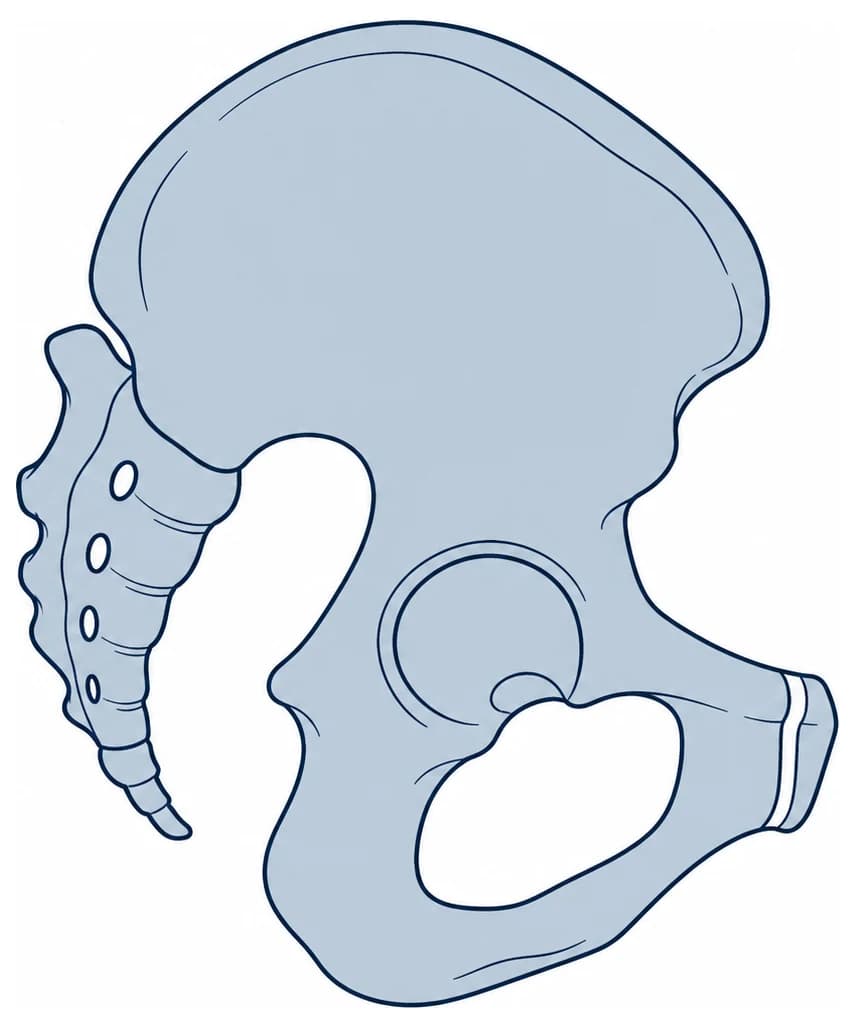
As pregnancy moves forward, a hormone called relaxin loosens the ligaments that normally hold your pelvis steady. Your center of gravity shifts forward, and the curve in your low back changes to keep you balanced. That combination puts new stress on your low back, your SI joints, and your pubic bone, often for the first time in a patient's life.
Many people who call around during pregnancy are looking for one thing specifically: a provider who is Webster certified and has adjusted pregnant patients before. That's often the first question on the phone, whether Dr. Chris is Webster certified and how the visit changes once you're pregnant.
What patients are dealing with when they call
- Low back pain that builds through the day and is often worse by evening, especially in the third trimester
- SI joint pain, an ache or sharp pain at the two points in the back of your pelvis, often worse on one side than the other
- Round ligament pain, a quick sharp pull in the lower belly or groin when you stand up fast, sneeze, or roll over in bed
- Sciatica, a shooting or burning pain running down the back of one leg, sometimes into the calf or foot
- Pubic symphysis pain, an ache or sharp pain right at the pubic bone that gets worse walking, climbing stairs, or turning over at night
- A pelvis that feels unstable or uneven, like one hip is carrying more weight than the other
What's different about a prenatal visit
Dr. Chris is Webster certified. The table has a section that drops away, with a pillow system that supports your belly, so you're not lying face down with pressure on it. Depending on how far along you are, you might be adjusted side-lying, seated, or on the modified table. The exam relies mainly on hands-on checks: how your pelvis and sacrum are sitting, how your low back is moving, and where your weight is landing when you stand.
Expecting mothers do not get X-rays here, so the plan is built from that hands-on exam and your history. The adjustment itself is scaled to what your body can handle at that stage of pregnancy, with lighter force used as needed. Dr. Chris adjusts on the first visit in many cases, then goes over the full findings with you at the second visit.
Questions people ask
- Is prenatal chiropractic covered by insurance?
- Not here. Adapt Life is a direct-pay practice and does not bill insurance, so you pay at the visit and know the cost up front. Some people use an HSA or FSA card. If you want to try to claim it back yourself, ask and you will get a receipt with what you need on it.
- Prenatal massage or a prenatal chiropractor, which do I need?
- They do different jobs and are not competing. Prenatal massage works on muscle and soft tissue, easing tension and helping circulation. Chiropractic looks at how the joints of the spine and pelvis are actually positioned and moving, which is a mechanical question massage does not answer. Plenty of people use both during a pregnancy.
- When in pregnancy should I start seeing a chiropractor?
- There is no required starting point. Some people come in during the first trimester, others when the low back or hips start complaining later on, and some come in after the birth. Care can carry through all three trimesters and afterwards. What changes as the pregnancy moves along is positioning and how much force is used.
- Does Dr. Chris see children as well as expecting mothers?
- Yes. He sees children and families as well as pregnant patients, and the analysis is the same five-part process adapted to the person in front of him. Force is scaled to the size and age of the patient.
- Does the Webster technique turn a breech baby?
- No. Webster technique does not turn, flip, or reposition a baby. It's a specific sacral and pelvic adjustment aimed at reducing biomechanical stress in the pelvis. If you're dealing with a breech presentation, that conversation belongs with your OB or midwife.
- Is it safe to get adjusted while pregnant?
- Dr. Chris asks about your pregnancy history and any complications before your first visit, and the exam and adjustment are adapted for each trimester, with lighter force used as pregnancy progresses. This care is meant to work alongside your OB or midwife throughout your pregnancy. If your OB has told you not to see a chiropractor for a specific reason, follow that guidance first.
- Will I need X-rays before my first visit?
- No. Adapt Life does not take X-rays for expecting mothers. The exam and plan are built from your history, your symptoms, and a hands-on check of your pelvis, sacrum, and low back.
- What happens at my first appointment?
- The first visit includes a history and a hands-on exam of your pelvis, sacrum, and spine, along with your first adjustment in many cases. The second visit is the report of findings, where Dr. Chris walks you through what was found and what the plan looks like from there.