
What to expect
Your first visit, start to finish
Nothing here is a surprise on the day. This is the whole sequence, including the part where you get in your car and drive down the road.
- 01
The conversation
A full case history, and not only the complaint that brought you in. What else is going on matters, because all of it helps work out which part of the nerve system is involved. Dr. Chris also explains what he does, so you can decide whether this is a good fit or whether you would be better served by someone else.
- 02
The neuro-structural exam
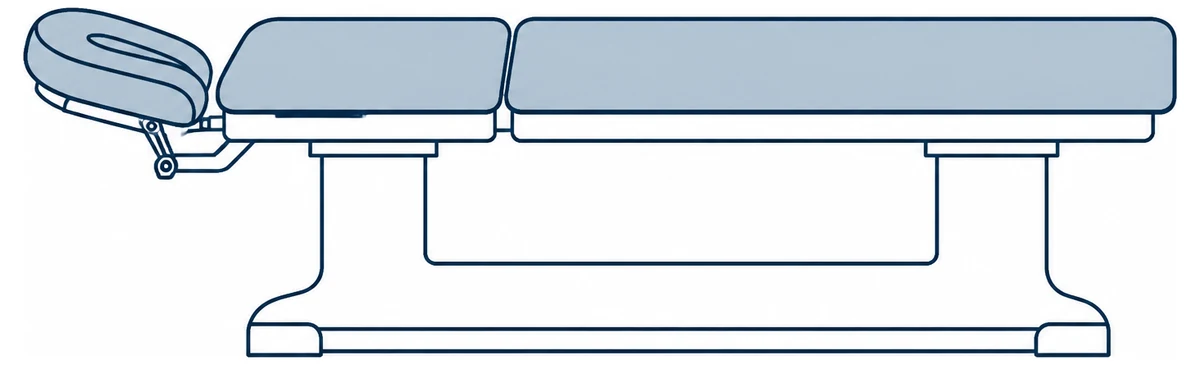
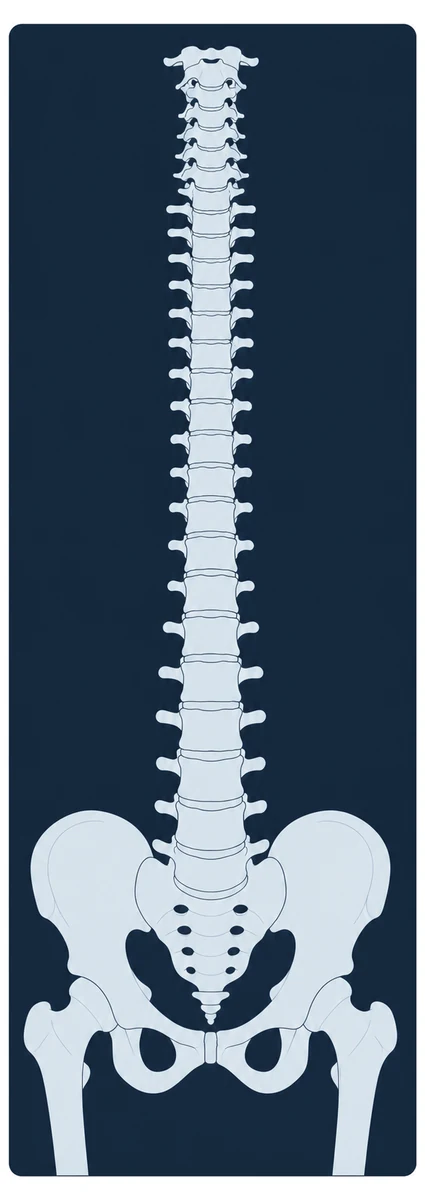
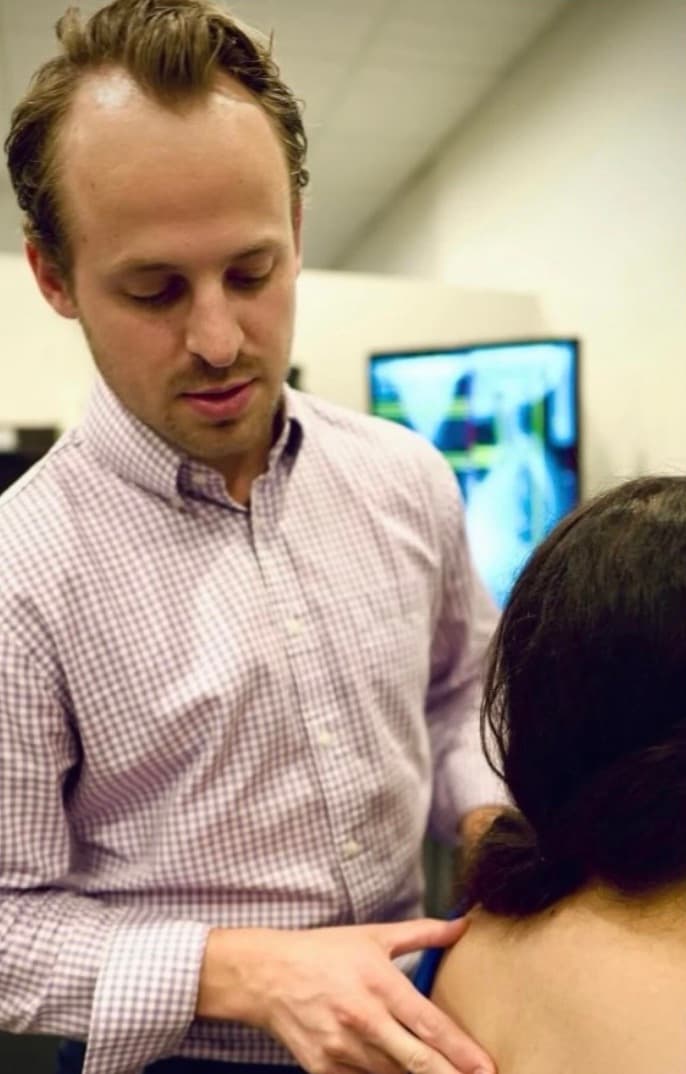
Global posture assessment, spinal range of motion, orthopedic and neurological tests, then the Gonstead analysis itself: visualization, spinal thermography with the nervoscope, and static and motion palpation of the spine and pelvis. You will be in a gown that opens at the back so your spine can actually be seen.
- 03
Films
You head to one of three partnering imaging centers just down the road for full-spine films. They take walk-ins, so there is no separate appointment to arrange. Films are not ordered for expecting mothers or newborns.
- 04
Back to the office, and your first adjustment
You come back and, in most cases, get adjusted the same day. Dr. Chris reviews the films against what he found on the table before delivering anything. Care starts on day one rather than a week later.
Practical things worth knowing
- What to wear
- Athletic clothing is ideal. Women should wear or bring leggings, and a hair tie.
- Visit two
- The report of findings, about thirty minutes. By then Dr. Chris has objective response data from both the exam and that first adjustment, which is what tells him the level of care you actually need to reach your goals.
- After that
- Regular visits run roughly ten to fifteen minutes.
- Intake paperwork
- Preferably done online before you arrive. Paper forms are available in the office if you would rather.
How ongoing care works
Care is tailored to your goals, and this is a practice built around long-term health and healing rather than getting you comfortable and moving on. Every patient starts on an initial plan of care aimed at correcting the problem underneath, not just quieting it down.
Not every case needs high frequency, but many do. Expecting a single adjustment, or the occasional one here and there without a plan, to fix a structural problem is the equivalent of telling your trainer you want a beach body but you will only work out once a week.
The plan has an end. What happens after correction is your call.
Book your first visit
The first conversation is about whether this is the right care for you. If it is not, he will tell you.
Would rather he called you? Leave your number
$50 off your first visit. Booking online? Mention where you found us at check in and it comes off your first visit.