
How it usually shows up
- Back pain with a clear line of referral into a leg or arm
- Symptoms worse with sitting, coughing, or bearing down
- A distinct list or lean when standing
- Numbness or weakness in a specific distribution
What Dr. Chris actually does about it
Full-spine films are taken on the initial visit and reviewed before any adjustment. The Gonstead listing system identifies the direction the segment has moved, which determines the line of drive of the adjustment. Getting that direction right is the difference between helping a disc case and aggravating one.
The five-part exam matters more with a disc case than almost anywhere else, because a disc that is bulging or herniated in one direction has to be adjusted in the specific opposite direction the analysis finds, and guessing based on where the pain is felt is not accurate enough for that job. Visualization and gait give a first read, the nervoscope pass along the segment adds a temperature reading, and static and motion palpation confirm which level is restricted and how it moves. None of that replaces the film. The Gonstead listing read off the X-ray is what actually sets the line of drive, and that reading happens before the first adjustment rather than being guessed at and corrected later.
A disc case is also where the referral conversation is most likely to come up early. If the films or exam point to a herniation that looks significant, or there is true neurological loss rather than pain alone, Dr. Chris says so on the first visit and works alongside an orthopedist, neurosurgeon, or physical therapist rather than trying to be the only provider involved. Chiropractic care and options like physical therapy or a spine specialist's opinion are not an either-or choice, and for a number of disc cases the more reasonable plan uses more than one.
Questions people ask
- Can a chiropractor help a herniated disc?
- Chiropractic care can help many people with a herniated disc, particularly when the herniation is mild to moderate and there is no significant nerve damage. The Gonstead approach used here starts with full-spine films so the direction of the disc's shift is known before any adjustment is made. It does not help every case, and some herniations need medical or surgical care instead.
- What is the difference between a bulging disc and a herniated disc?
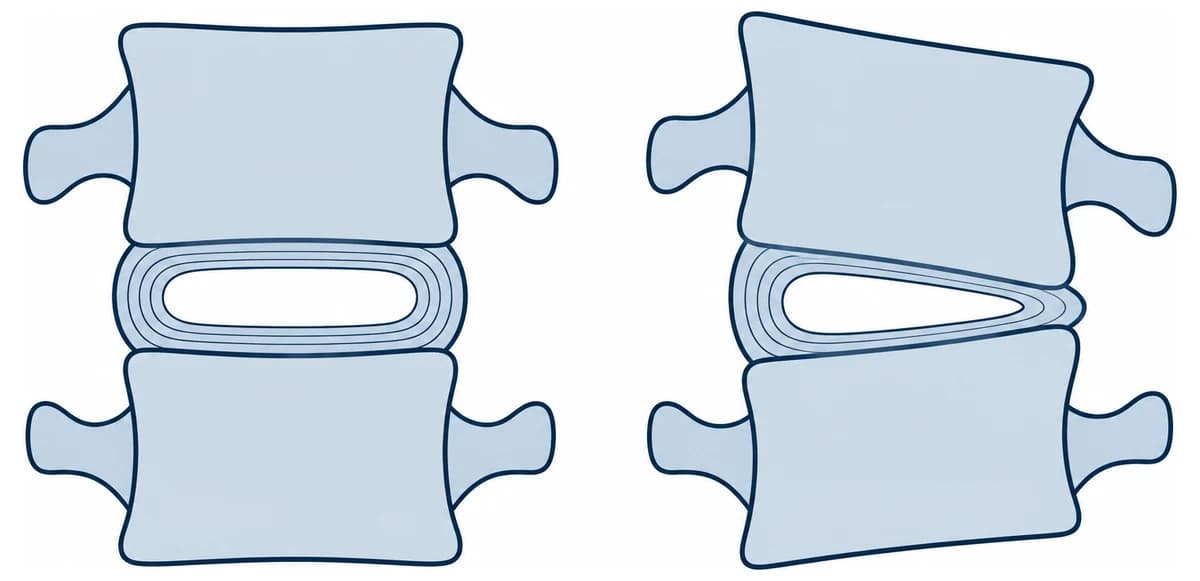
- A bulging disc is the outer ring of the disc pushing outward while staying intact, and it often causes fewer or no symptoms. A herniated disc means that outer ring has actually cracked, letting the softer inner material leak out, which is more likely to irritate a nearby nerve and cause sharper, more localized pain. The two are related but not the same injury, and film or MRI is what distinguishes them for certain.
- Can a chiropractic adjustment make a herniated disc worse?
- It is possible, though not common when the case starts with a real exam and imaging. Adjusting a segment in the wrong direction, or adjusting at all when a herniation is large or already pressing on a nerve root, is the scenario that can aggravate it. That is the reason films are taken before care begins here instead of after, and why the adjustment follows the specific direction the analysis calls for rather than general manipulation of the area.
- Is chiropractic or physical therapy better for a herniated disc?
- They work differently rather than one being better outright. Chiropractic care tends to focus on the joint itself and can bring relief more quickly for some people, while physical therapy builds strength, movement, and control over a longer stretch and has good evidence for keeping a disc problem from coming back. Many people end up using both, and Dr. Chris will say directly if physical therapy looks like it should be part of your plan.
- Does a herniated disc always need surgery?
- No. Most herniated discs improve with conservative care such as chiropractic, physical therapy, or time, and surgery is generally reserved for cases where conservative options have not worked or where there are clear neurological red flags. Dr. Chris will tell you plainly if what he sees on your films or exam looks like a surgical case rather than trying to treat it anyway.
- How long does it take for a herniated disc to feel better?
- There is no set timeline, and it depends on the size of the herniation, which level is involved, and how long it has been irritated. Some people notice a change within the first couple weeks, and others take considerably longer, especially with a larger herniation. Dr. Chris gives you an honest read of what to expect for your specific case after the exam and films rather than quoting a general number.
- When is a herniated disc a medical emergency instead of a chiropractic case?
- Go to urgent care or an ER instead of scheduling here if you have new loss of bladder or bowel control, numbness in the groin or inner thighs, or leg or arm weakness that is getting worse day to day. Those are signs of significant nerve compression, sometimes cauda equina syndrome, and need medical evaluation first. Outside of those signs, a herniated disc is generally reasonable to have evaluated by a chiropractor.